
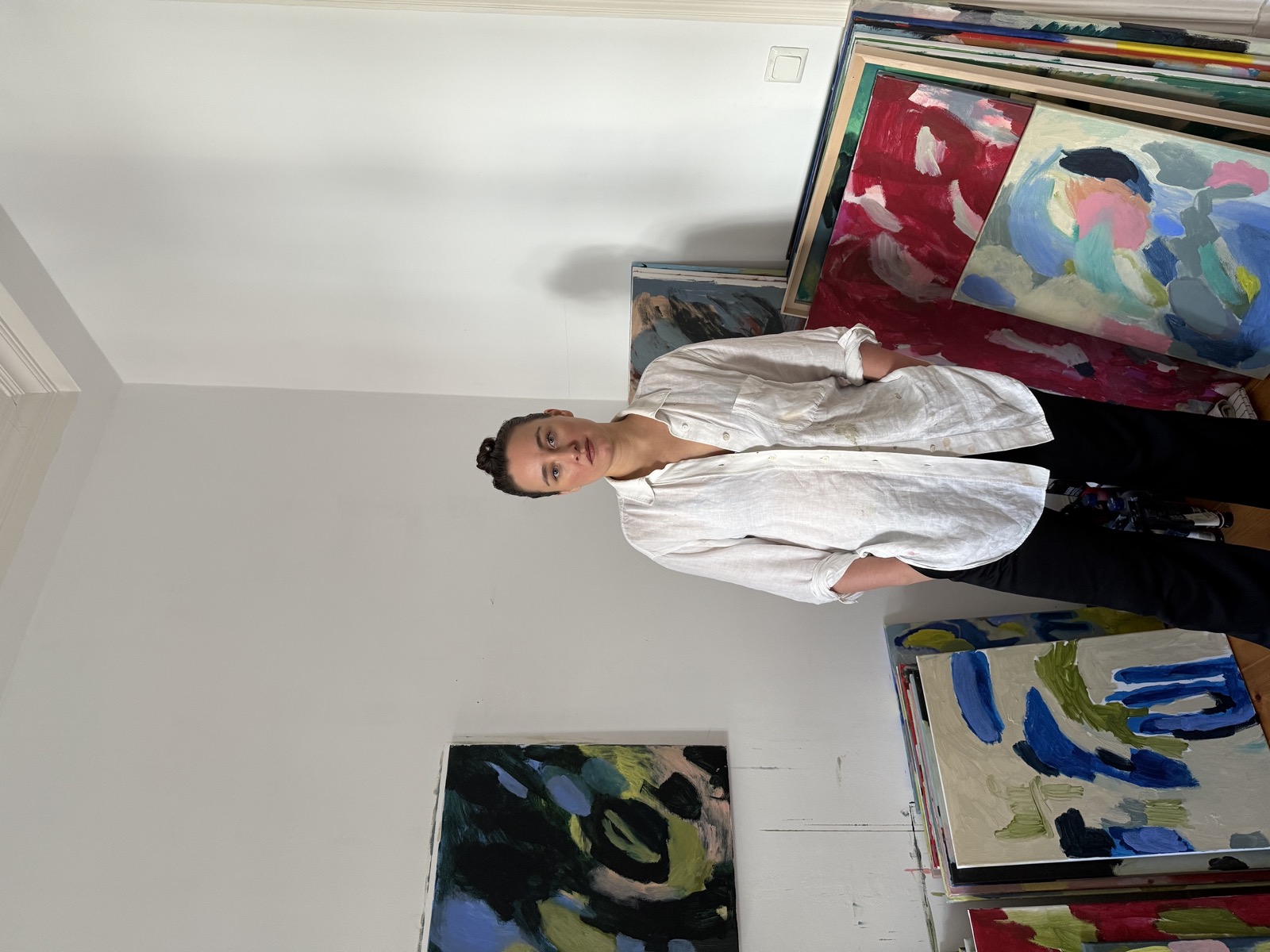
At four, I took my first art classes. By then, I was already making up stories while I painted, building worlds in images before I had the words for them. Following that path, I went on to study design, still searching for ways to express myself through colour and form. But design eventually led me into strategy, and for a long time I focused on analysing rather than expressing.
A few years ago, painting came back, and it came back differently: larger canvases, and images that let go of anything that needs to be analysed. I start with little more than a colour or a feeling, and the plan usually dissolves with the first stroke. A place, a piece of music or a conversation turns into colour in my head. I work with oils, acrylics, oil pastels and oil sticks, as well as pigments I have discovered while travelling, layering and mixing them, and paint with whatever finds its way into my hands. I follow what the painting asks for.
Through my creative practice, I try to cultivate a space in which I allow my perspective to unfold. Each finished work marks the time I did not spend immersing myself in a digital world or asking a language model for an answer. A practice that runs contrary to, yet complements, the way the world is moving forward. More devotion than explanation. More questions than answers. Processing through expression instead of analysis.
A painting is finished when it stops arguing with me.
I’m not interested in whether someone sees a painting the way I do. I’m interested in what they find in it that I never put there.